Plus ça change...the more things change: Iran, Ukraine, Hungary...Elections: Marine's baaack...For our paid: Convo with John Katsos...The Economist on a stunning oligarch... Global Cartoon portfolio
In this weekly feature for Andelman Unleashed, we continue to explore how media of other nations view America and the rest of the world, bringing to bear 60 years of reporting from 90+ countries. We cover lots of ground—diving each week through 30+ newspapers & 100+ websites on every continent. You may not want to read it all, but it’s all here for you!
We can all learn from what others say about us, around the globe.
To accomplish this mission for you, I pay for a host of global media—newspapers, magazines, websites, television—so you all can become better informed about the world…A (lightly) paid, even Founder subscription would help if you are able…and allow you to participate to the fullest in our adventures.
—Editing by Pamela Title
How the world sees America
Plus ça change ….
Plus c’est la même chose …. The more things change, the more they stay the same. A hat’tip to my august predecessor, Jean-Baptiste Alphonse Karr who coined the phrase as editor of the French daily Le Figaro back in 1848 when revolutions began in Italy and France, then swept monarchies across Europe. Little remained the same.
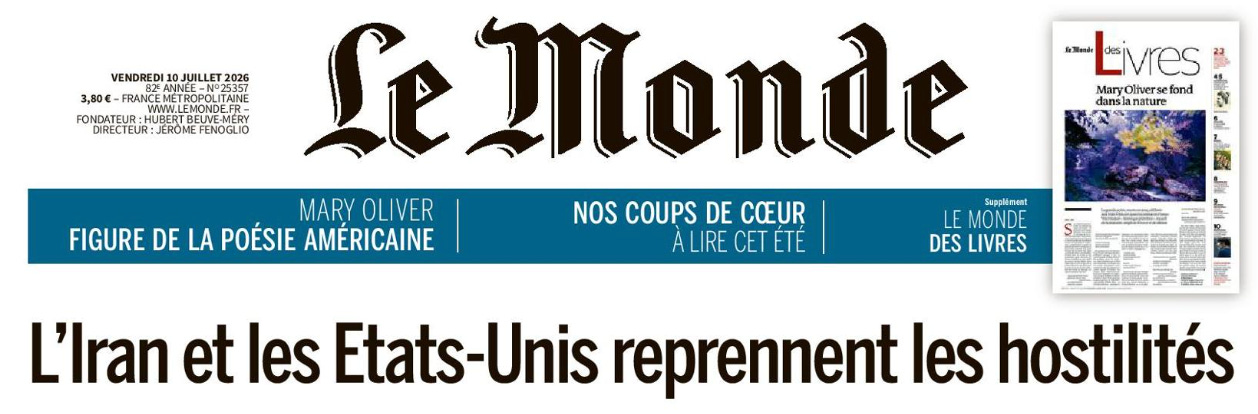
That seemed to be the case in and around the Persian Gulf, as Le Monde headlined:
“Iran and the United States resume hostilities”
By the week’s end, Trump had begun demanding:
Donald Trump has said the Iranian attacks mean the ceasefire is over, but that talks aimed at ending the war would continue. Iranian Foreign Minister Abbas Araghchi has accused the US of violating the deal.
Tehran privately acknowledged to Trump’s advisers an "errant" sect of hardliners was trying to undermine negotiations. US officials said a message to Tehran’s leadership had been conveyed through regional mediators demanding Iran release a statement declaring the Strait of Hormuz open and pledging to stop shooting at commercial ships. “They’re either going to give us that statement or we’re not having a good outcome for them,” said one official/
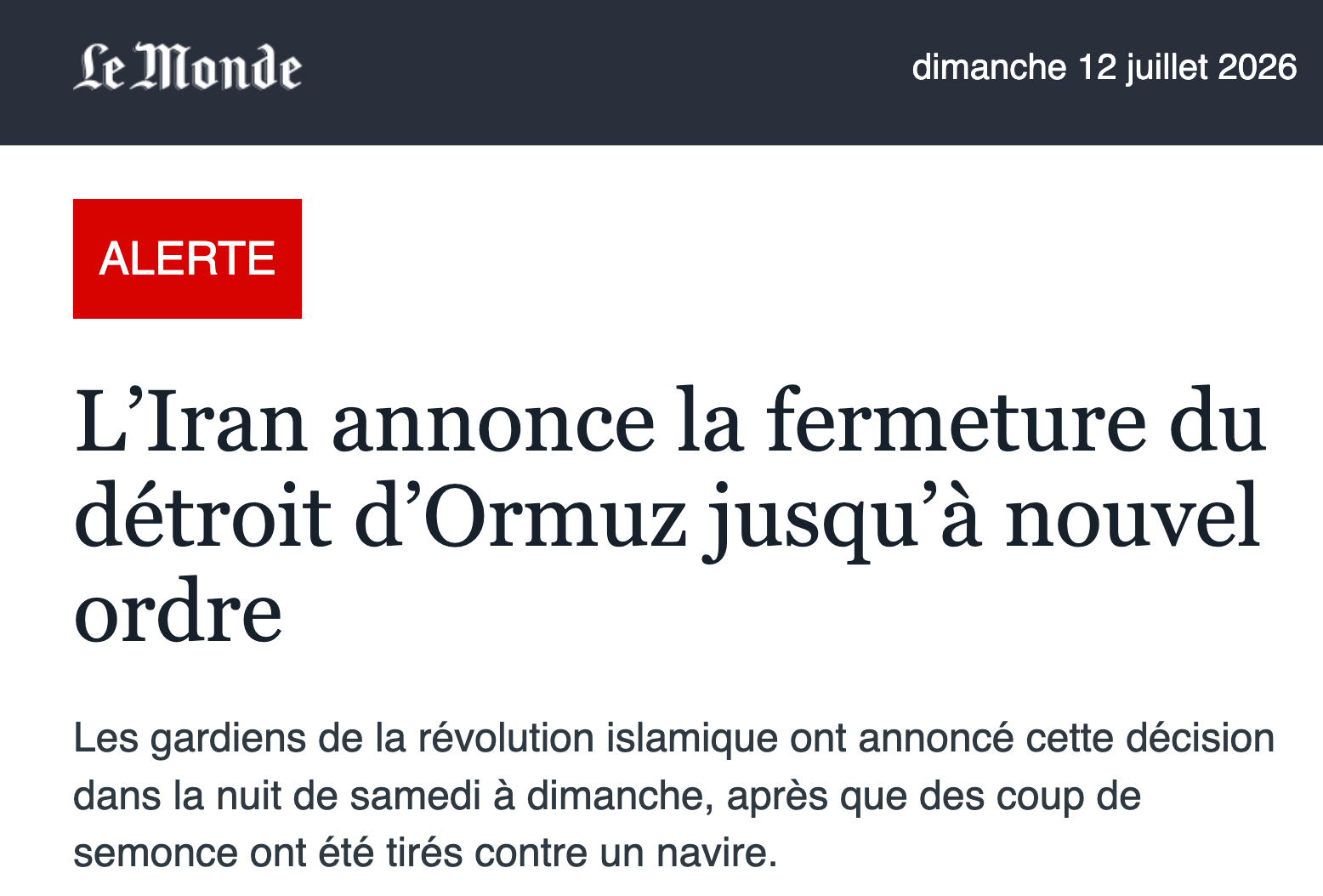
None of that happened. The Strait is now “closed” … The fear is that there may well be a dramatically shrinking number of viable scenarios.
Andelman Live
Wednesday evening, I explored avenues for the future with Meredith Gorman on Fox5 Live news….I pointed out my belief that the launch of America’s war against Iran opened Iranians’ recognition of a new reality that never truly occurred to them until the Strait of Hormuz became a part of Trump’s new war. Their control over the Strait—their ability to keep a knee on the neck of the world’s economy—may well prove more useful than any nuclear weapon with its tremendous attendant costs.
Earlier last week, the Institute for the Study of War was pointing out:
Iran is willing to return to a large-scale conflict with the United States if necessary to secure its control over the Strait of Hormuz. Iran’s behavior after the latest US strikes indicates that the Iranian regime values control over the strait more than avoiding renewed escalation with the United States.
Of course, there is the countervailing argument: that Iran may have also come to recognize that the Strait may prove to bea powerful bargaining chip now but of diminishing returns as oil producers bordering the Gulf hasten projects of new pipelines that would (eventually) render the Strait obsolete. John Katsos, professor at the Unversity of Sharja in the United Arab Emirates, creator of Substack’s The Mind Prepared, and Celebrity Guest on Unleashed Conversation for our paid subscribers, painted a far broader—and potentially darker—picture of a global conflicts on which the world has embarked….
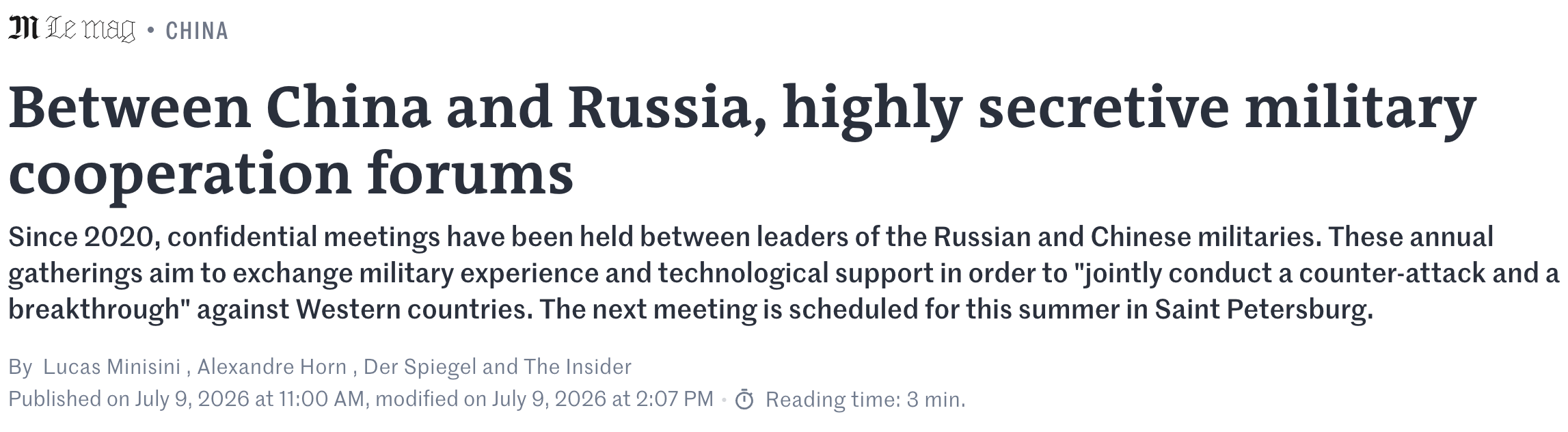
Indeed, the cooperation between, especially within, blocks seems to be deepening…as an investigation by Le Monde,Der Spiegel and The Insider disclosed:
Officially, China and Russia maintain only a "strategic" partnership involving military cooperation that poses "no threat to any third country," their leaders repeatedly insist. Behind the scenes, however, the outlines of an increasingly close rapprochement are emerging, as revealed by confidential documents.
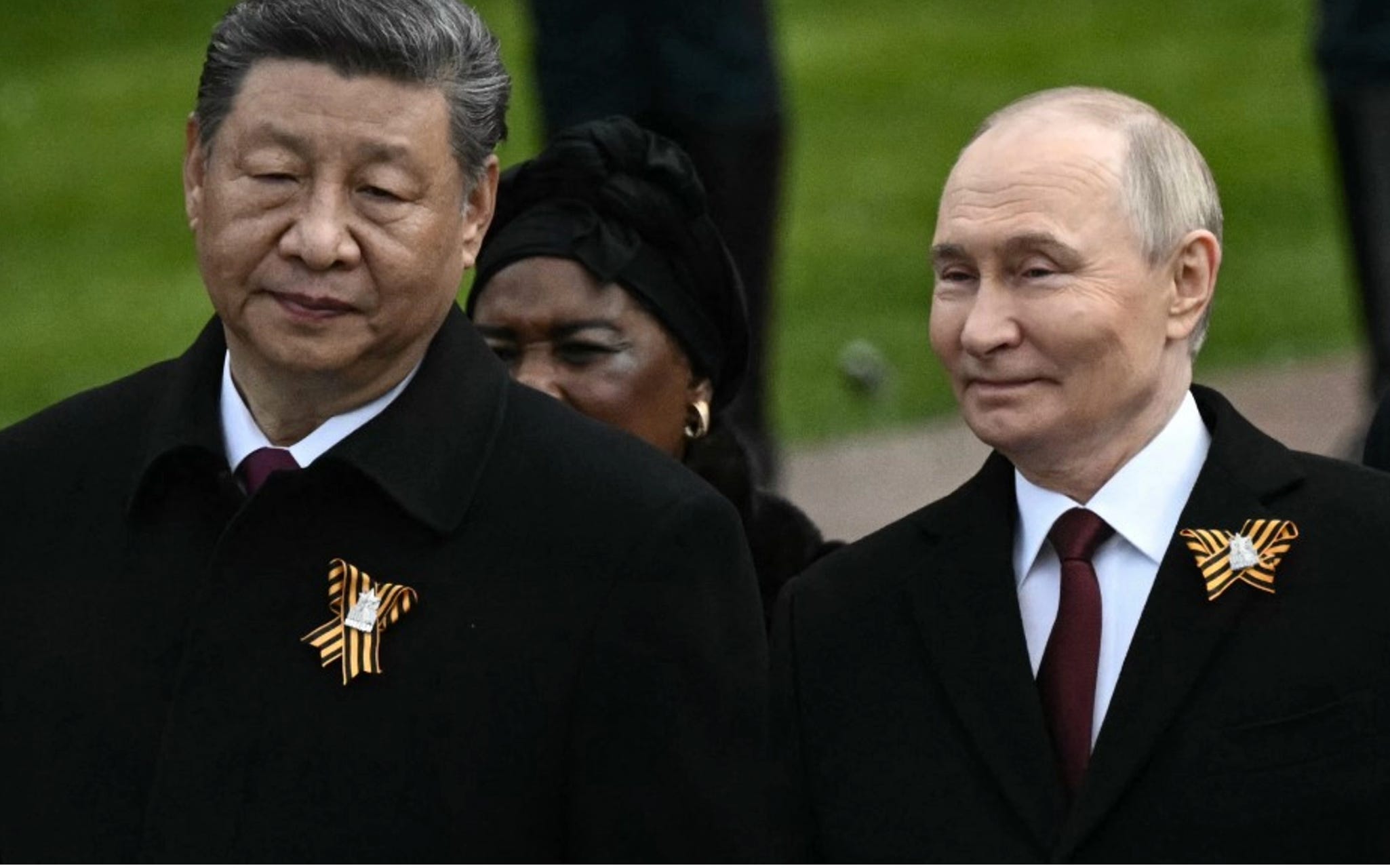
Pretty smug….
Beijing is offering to provide technological support to the Kremlin, particularly in the field of artificial intelligence, drones and defense systems. Coinciding with the annual military summit, 16 Chinese officials and 12 Russian officers met in Moscow to develop, among other things, a “next-generation weapons system“ to counter ballistic and hypersonic missiles, which are primarily held by the United States.
An on cue, The Kyiv Post reported:
Zelensky said China has communicated to Russia that nukes are a no-no, but around the same time, a leaked presentation showed that Beijing and Moscow have worked more closely than initially believed, jointly developing arms projects— including one aimed at destroying the US’s Starlink.
Back to plus ça change…
In the Persian Gulf, in line with this scenario, the Institute for the Study of War wrote:
Iran will not discuss its nuclear program unless the United States recognizes Iran’s control over the strait. Iran has also not provided any specifics about what elements of its nuclear program it is prepared to discuss. Iran has previously also conditioned opening the strait and discussing its nuclear program on the cessation of Israeli operations against Hezbollah in Lebanon.
And while Professor Katsos suggested life in the Emirates was somewhat calm, there may be some suggestions that could change at any moment, as ISW continued:
Iranian officials and analysts have blamed the UAE for supporting US strikes against Iran, both during recent exchanges of fire between Iran and the United States and during the war. Iranian Parliamentarian and National Security Commission member Esmail Kowsari accused the UAE of conducting attacks against Iran and threatened to target the UAE’s maritime, rail, and air transport infrastructure in response. An analyst close to the regime stated Iran should add the UAE to its “target bank” because the UAE is covertly seeking to undermine Iran’s control over the Strait. The regime likely calculates it needs to adopt an aggressive approach against the UAE due to the UAE’s military support from the United States and Israel.
So who exactly are we dealing with in Iran? As Trump told pool reporters traveling with him to this week’s NATO summit in Ankara:
They're scum. You know what scum is? They're scum, they're sick people, they're led by sick people, and they're vicious, violent people."
Still, two days later, heading home, he’d been reflecting….
I think they're much more rational than level one—level two — level one is done, level two is done. This is level three. I think they are more rational, but based on their actions over the last week or two, they're not doing a service to the people.
Indeed, it seems not only their actions, but their pledges…from “level three”….
As Iran International added :
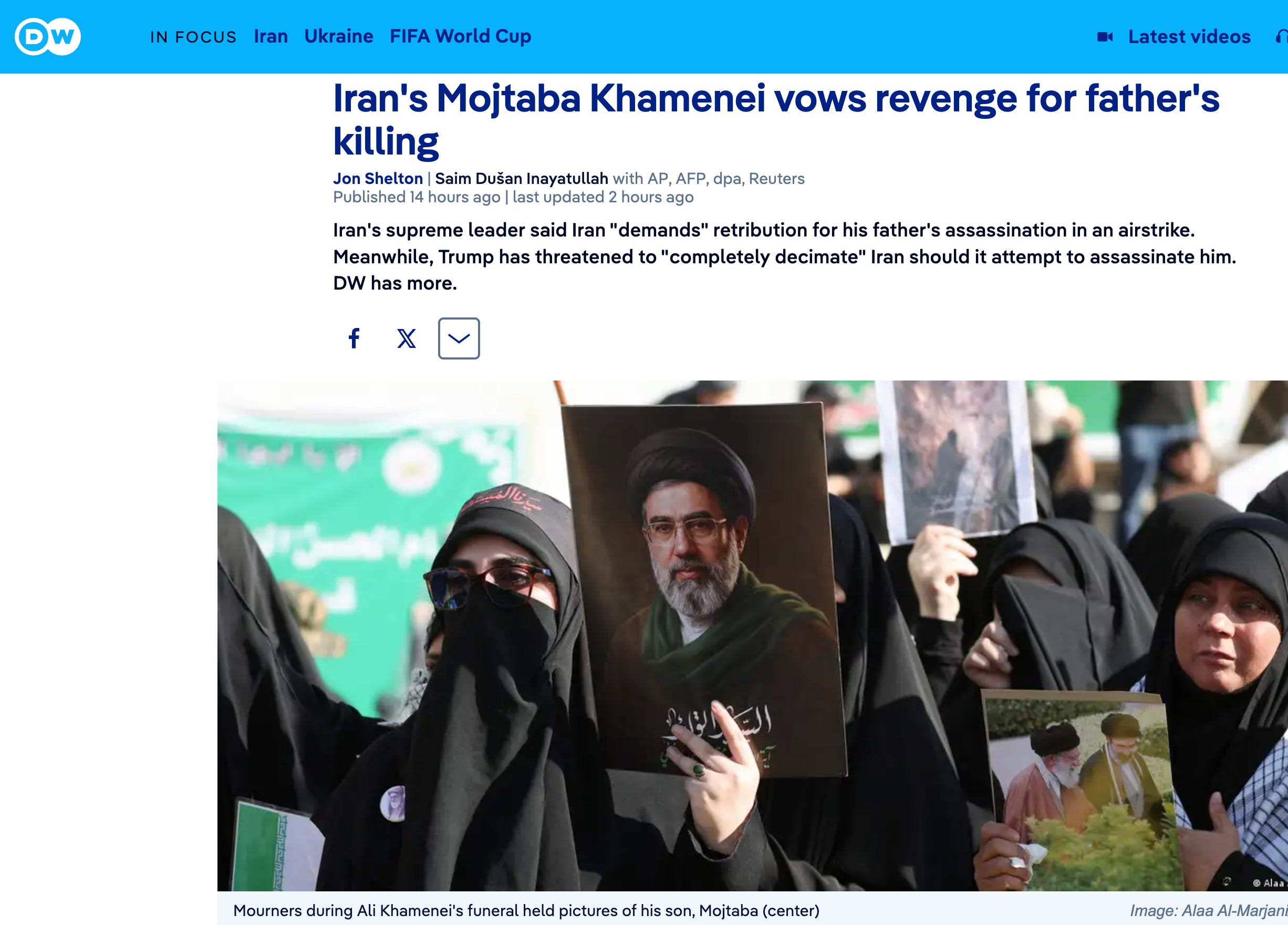
Iran’s Supreme Leader Mojtaba Khamenei said revenge for the killing of his father and others killed in the two recent wars would be carried out regardless of whether he or other officials remained in office: “We pledge to avenge your pure blood and the blood of all the martyrs of these two wars against the criminal and disgraced killers. This revenge is the demand of our nation, and it must certainly take place.”
He said those responsible would “take the hope of a peaceful death in their beds to the grave,” adding that retaliation did not depend on his own presence or that of other officials. “Whether we are here or not, this will be achieved, and soon individuals among the freedom-seekers across the world will each carry out part of this divine mission,” he said.
The message was dated July 9, the day Ali Khamenei was buried in Mashhad, but was released Saturday.
The world has still not seen Mojtaba Khamenei, apparently wounded and possibly disfigured in the same attack that killed his father last month.
At least that’s what appears after Trump’s NATO trip and one-on-one with Zelensky on the sidelines, as the United States gives the go-ahead to Patriot production inside Ukraine. As the Kyiv Post observed, the need is approaching the desperate:
Russia launches 20-40 ballistic missiles at Ukraine every month. The PAC-3 missile interceptor is the only weapon in Ukraine’s arsenal capable of shooting down those ballistic missiles before impact.
The most common Russian ballistic missile, the Iskander-M, carries a half-ton warhead capable of leveling roughly one-quarter to one-half of a typical Ukrainian apartment building and collapsing that part of the structure on the people inside. Ukraine was running critically short of PAC-3 interceptor missiles last month and had effectively run out by July 1. This allowed Russian strike planners to hit targets in Ukraine with ballistic missiles with impunity.
On July 1-2 and July 5-6, Russia launched 24 ballistic missiles and 23 ballistic missiles, respectively. None was intercepted, and all hit their targets. These same nights, Russia also launched high-speed Zircon missiles, which Ukrainian air defenders struggle to counter without Patriot PAC-3 missiles. Russia launched four Zircons on July 1-2 and six on July 5-6. None was intercepted. When Ukraine has had PAC-3 missiles available, its air defense units have usually shot down at least half of incoming missiles, sometimes more than two-thirds.
Following the US-Israeli attack on Iran and the outbreak of war, Pentagon officials said the US military did not have enough PAC-3 missiles for its own needs and would therefore have first option on all future US PAC-3 production.
This week with Zelensky in Ankara, Trump signaled an effective reversal of 18 months of White House policy that had blamed Zelensky and Ukraine for the war’s failure to end. Trump praised Ukrainians for their resilience and innovation, and said the US would allow Ukraine to produce Patriot interceptor missiles under license after Washington “showed them how to do it.”
Indeed, Zelensky was pretty direct in an exclusive interview with the Financial Times:
The decisive phase of Russia’s war against Ukraine has shifted from land and sea to the air, Volodymyr Zelenskyy said in an interview. Speaking to the FT from his central Kyiv office, the Ukrainian leader also said he felt that US President Donald Trump was viewing the war in a new light and “wants to be where there’s success”.
FT columnist Gideon Rachman had some disturbing thoughts:
The increasing frequency and accuracy of Ukraine’s long-range drone strikes have caused Russia’s biggest fuel crisis in decades. It has also created a growing sense that the momentum in the war has changed. Mark Carney, Canada’s prime minister, said: “We, the Germans, the UK, the French all are of the view that the tide has turned . . . Putin is going to lose.” But few people believe that the Russian leader will simply accept defeat, so western policymakers are braced for a summer of escalation. “The question we’re all asking”, says one, “is what is Putin going to do?”
There are four main escalation avenues. The first is conventional actions on the battlefield with Ukraine. The second is nuclear weapons. The third is a direct attack on Nato. The fourth is “hybrid warfare”—Russian covert efforts to attack western infrastructure or individuals. There is an expectation that Russia will throw more troops into the “meat-grinder” of the frontline over the summer.
Meanwhile, consternation in the Kremlin, as ISW suggests:
The Kremlin appears to be struggling to adjust its narrative line in response to the Trump administration’s recent denial of Russian negotiating tactics and acknowledgement of Ukrainian battlefield successes….
Peskov also stated on July 9 that Trump did not call Russian President Vladimir Putin on July 8 but noted that Putin remains open to talking with Trump.
[Trump said en route to NATO that he talked with Putin and Zelensky. ]
[Also] an anonymous Russian general reportedly acknowledged that the Kremlin is inflating Russian battlefield successes to generate a false perception of Russian sweeping advances while maintaining its commitment to a war of attrition that Russia cannot win in a continued attempt to convince Ukraine and the West to capitulate to Russia’s demands.
New threats, new challenges, their antecedents…Plus, an inscribed copy of my book, A Red Line in the Sand. Founding members get my last three books and lunch withn Andelman! Along with a weekly portfolio of cartoons…and Friday our weekly live conversation.…with a new Celebrity Guest to decode the universe, or America’s next challenge:
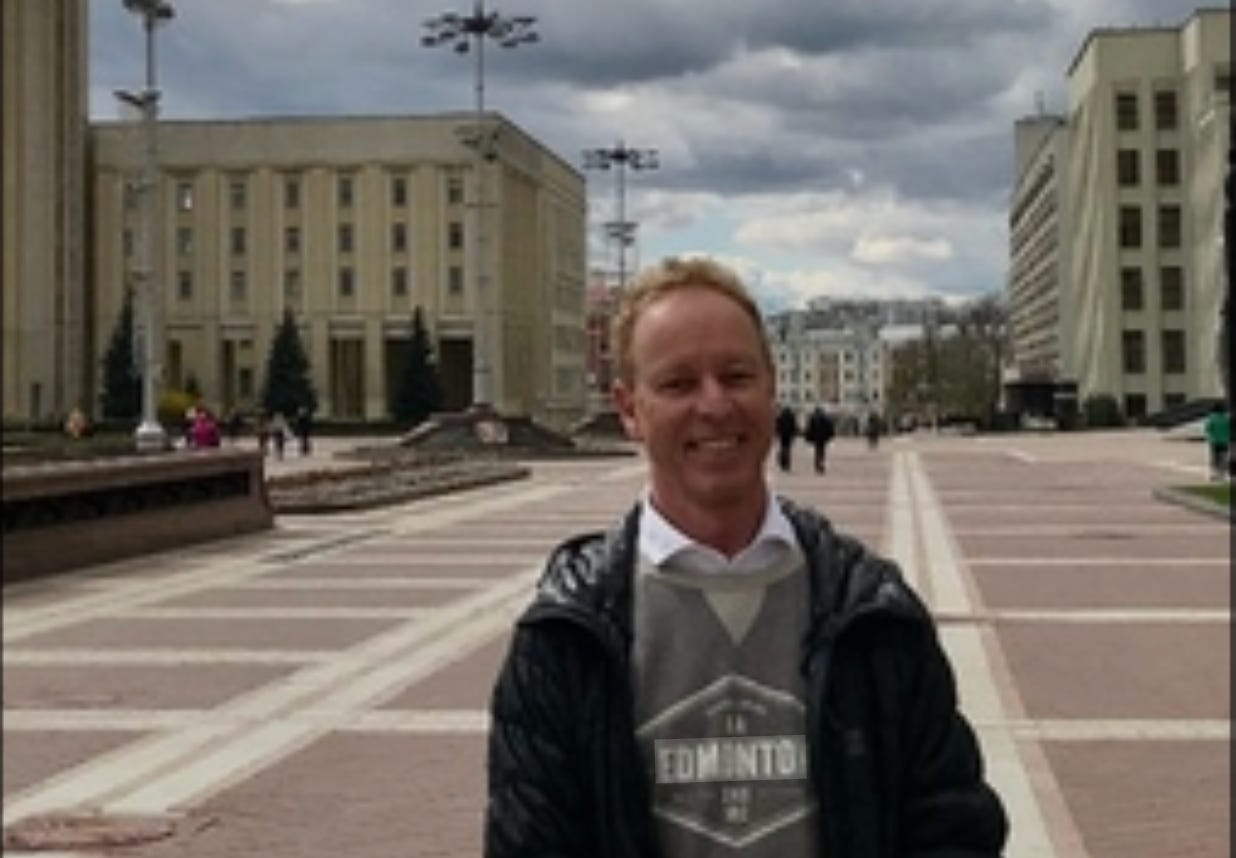
Distinguished Professor in the Faculty of Arts of the University of Alberta, his focus is the history and politics of Belarus, Ukraine, and Russia in the 20th and 21st centuries, with over 20 books—recently Belarus: What Everyone Needs to Know fromOxford University Press with Belarusian scholar Veronica Laputska (now safely in Poland!) which begins at the 2020 uprising, then moves from earliest times to the present. He’s spent much time in each of these countries.
Tuning out Orban…
Is what’s going on in Hungary with wannabee autocrat Viktor Orban voted out, successor Peter Magyar is going after his institutions with a cudgel, and Europe at least is looking on with glee, as The Times of London observed …
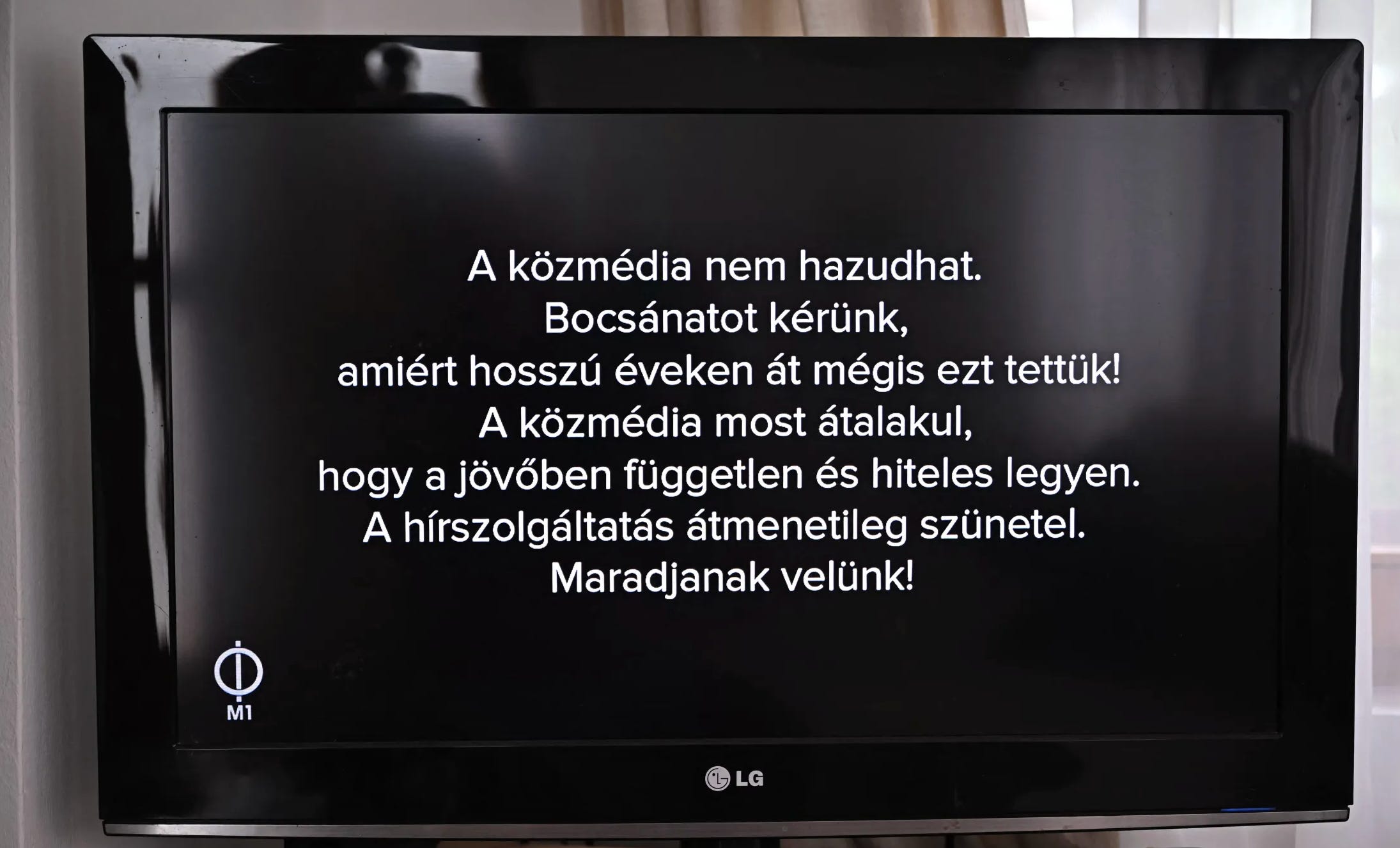
This week, when listeners tuned in to Kossuth Radio, the Hungarian equivalent of BBC Radio 4, instead of the news they were serenaded with Mozart’s Flute Quartet No 3 in C major, Stravinsky’s Symphony in Three Movements and Britten’s String Quartet No 3 in G major. What had once been a favourite mouthpiece of the strongman prime minister Viktor Orban, hosting a softball interview with him every Friday morning, had been abruptly suspended and replaced with the main classical music channel, Bartok Radio.
The sudden news blackout on Hungary’s public broadcasters is one of the most tangible elements of what Peter Magyar, Orban’s successor, has termed Operation Cleansing Fire: a relentless campaign to purge the public sphere of all remnants of the ancien regime. Three days after Magyar won a landslide election victory over Orban. the premier-elect toured public broadcast studios, accusing their editors of “Goebbels-style” mendacity, telling one interviewer live on air, “this factory of lies will be shut down”.
Now, he’s made good on that threat. Viewers tuning into M1 for the regular 4pm news programme saw only a message in white text on a black background….
“Public media cannot lie. We apologise for having done just that for many years! Public media is now undergoing a transformation to ensure it remains independent and credible in the future. News coverage is temporarily suspended. Stay tuned!”
We shall !
Elections 2026 : France
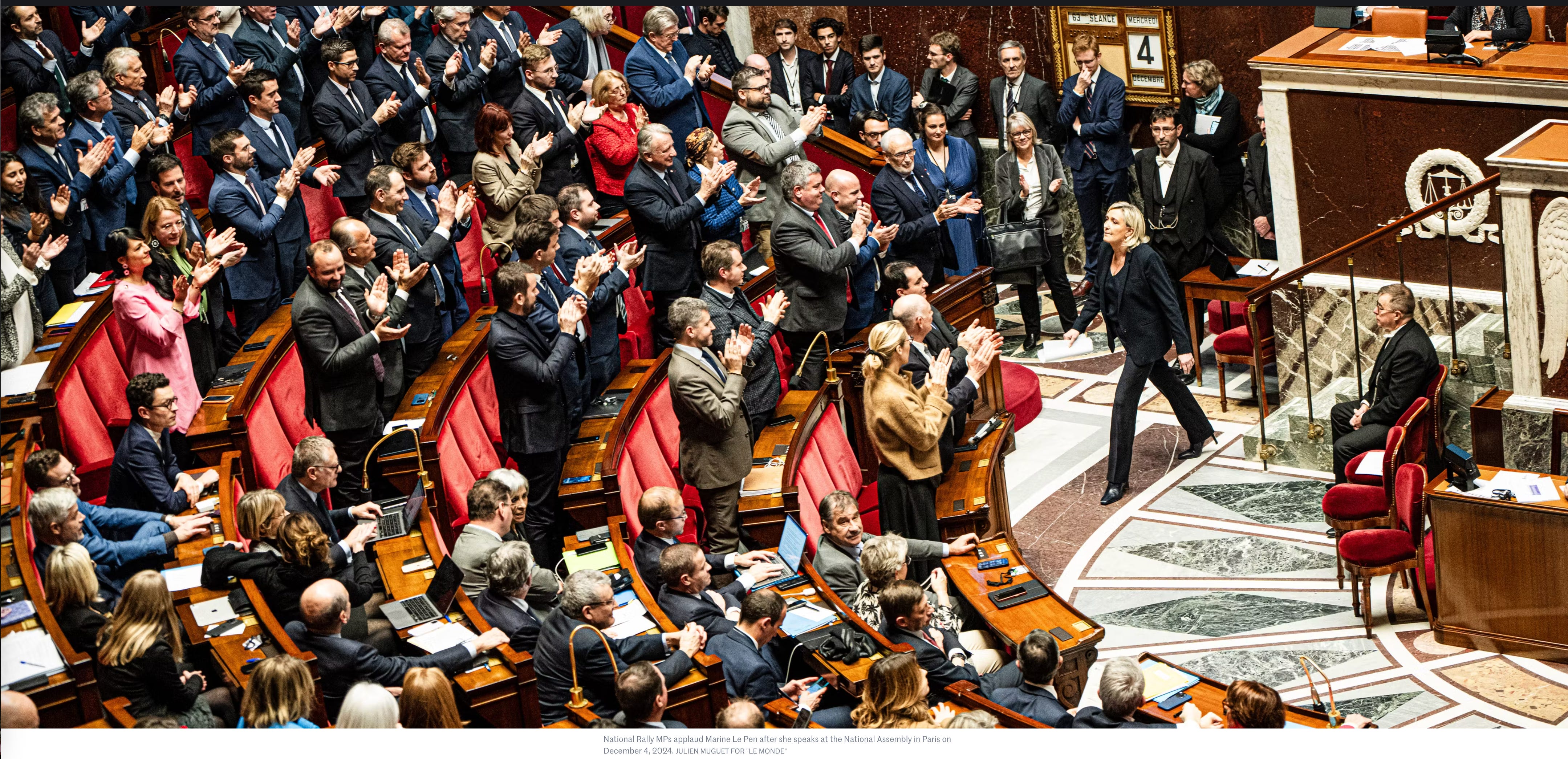
She’s baaaack. Just when you thought she’d faded into political oblivion, sabotaged by her conviction for embezzling over €4 million in European Parliament funds to pay national party staff, France’s highest court plucked her from oblivion. As Le Monde so elegantly put, it Marine Le Pen became ….
Candidate for the 2027 presidential election: the myth of the far right’s “phoenix”
Still convicted for "misappropriation of public funds," the leader of the far right took advantage of greater leniency from the appeals court judges—with her ineligibility reduced to the bare minimum—to confirm her candidacy for the 2027 presidential election that same evening on [nationwide] TV….[and] posing Christ-like, arms outstretched in a cross, on an initial poster celebrating "rebirth."
Standing O from her claque in Parliament…the single largest bloc…everyone else sits on their hands
The populist reflex and the martyrological rewriting of a serious breach of integrity sit uneasily, however, with a party so concerned today with its image as a legitimate establishment figure. Marine Le Pen’s conviction is a blemish on the achievement of her grand project: bringing back to power an extreme right wing that her father had restored to the center of the French political arena after decades of marginalization of a camp discredited by collaboration and the Vichy regime during the Second World War. For twenty years, the daughter of the “devil of the Republic” worked tirelessly to normalize the former pariah party.
And she only keeps gaining in the polls, as Bloomberg noted….
Le Pen would get between 34% and 35.5% of the vote in the first round if it were to take place this Sunday, according to the poll of 1,503 adults by Elabe for BFM TV and La Tribune Dimanche newspaper. Her closest rival would be Edouard Philippe, a former centrist prime minister under President Emmanuel Macron, who was favored by as many as 19% in one of six scenarios. Far-left France Unbowed leader Jean-Luc Melenchon would trail him in third, except in one line-up where rival centrist former premier Gabriel Attal also is in the running. Le Pen would beat all three in the runoff, according to the online poll. The runoff is on May 2.
Andelman Unleashedwill be following every step of the way.
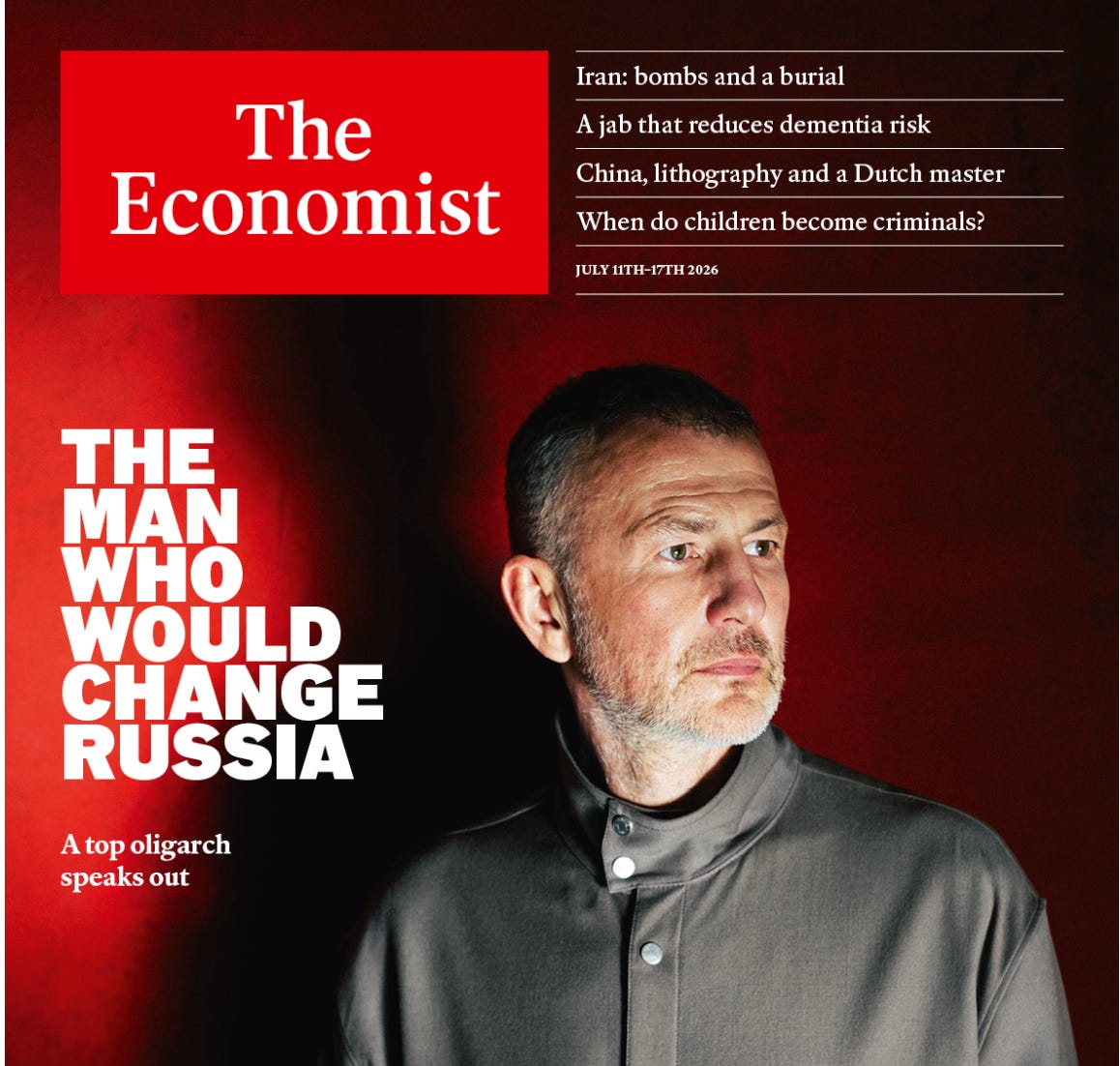
The man we are writing about this week is not a household name…definitely not a household face. Andrey Melnichenko is a big cheese in fertilizer. He’s Russia’s most important industrialist. He also spent 60 hours talking to The Economist about Russia and its problems. We think his intervention is highly significant. In Vladimir Putin’s Russia, for such a man to talk publicly is in itself a political act.
Indeed, Le Monde itself echos this morning a very similar sentiment as this oligarch:
By triggering, through its attacks on refineries, the worst fuel crisis Russia has seen in decades, Ukraine has dealt a blow to the tacit social contract between Vladimir Putin and his people, according to which stability and prosperity are guaranteed in exchange for reduced freedoms. The outbreak of Ukrainian attacks in Moscow, St. Petersburg, and even Siberia, where, for the first time in their lives, Russians are witnessing war from their windows, has sown uncertainty about the regime's ability to protect their basic needs.
We’ll unpack more below the paywall….plus the full hour of Unleashed Conversation with Prof. John Katsos … And our weekly portfolio from the world’s Cartoonists.
Keep reading with a 7-day free trial
Subscribe to Andelman Unleashed to keep reading this post and get 7 days of free access to the full post archives.